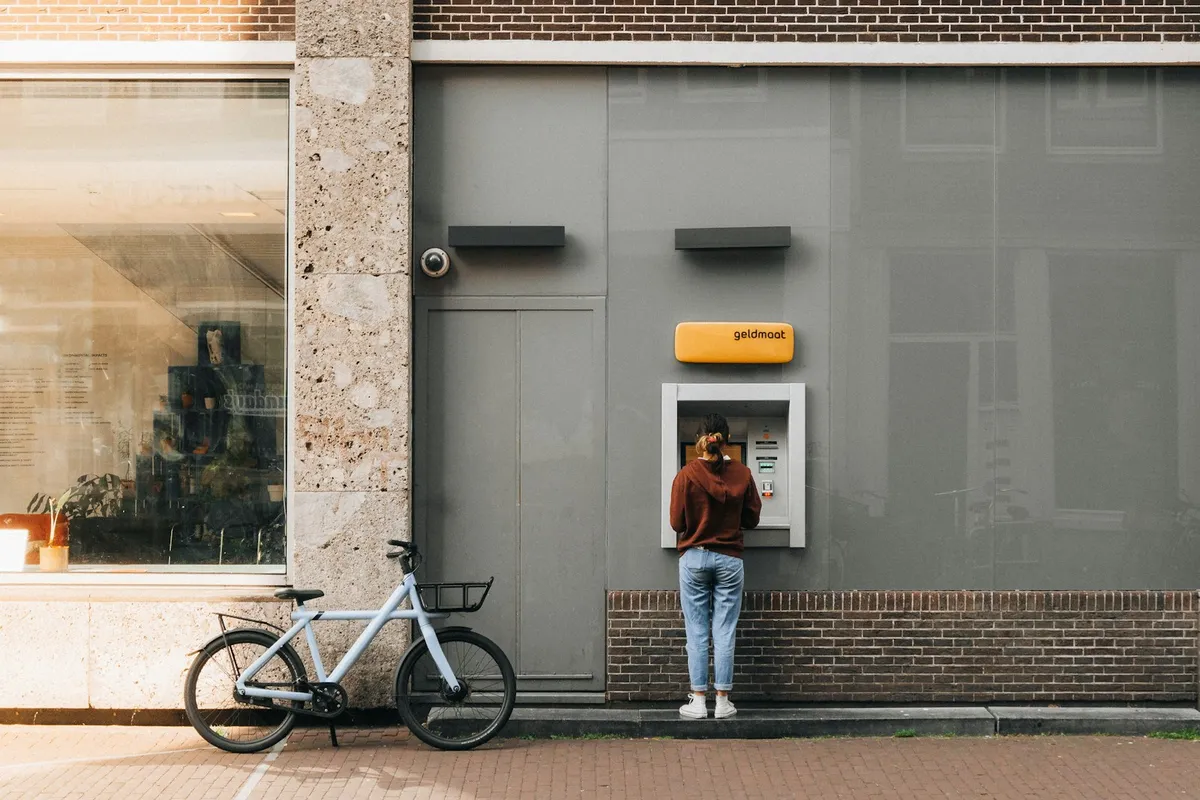
A crypto kiosk — the machine in a shop that people call a bitcoin ATM — takes cash, or sometimes a card, and a company credits cryptocurrency to an address. The coins are not inside the cabinet. The cabinet is a cash window with a screen, a camera, and a fee that is often much wider than an exchange’s advertised rate. If the address on the screen is yours, you may end up holding keys. If the machine only prints a receipt or a code for an app, you have a claim on the operator. Those are different products wearing the same box.
How buying crypto actually works is the longer version of an on-ramp. An exchange balance is an IOU, not a wallet. This page is the cash version of that sentence. It is not a list of neighbourhoods, not a fee league table, and not an instruction to use or avoid a particular machine tonight.
What the machine actually does
You choose a direction. Cash in, crypto out is the one most laws are now staring at: you feed notes, you scan or type an address, the operator’s wallet sends coins, and the spread between the price on the screen and the price on a large exchange is how the machine eats. Crypto out, cash in is the reverse, and it is a withdrawal from somebody’s float into a tray of notes. Crypto-to-crypto on the same box is a swap run by that operator, still not a protocol. The QR code is an address or a session with the company. Read it the way you would read any send screen. The wrong address is still the wrong address, and the kiosk will not phone the chain and ask for the coins back.
The operator is a money business. In the United States that usually means a money-transmitter licence, a Bank Secrecy Act programme, and a camera. Identity checks, receipts, and limits are not decoration. They are how the firm says it knows who handed over the cash. A machine that skips them is not a bargain. It is a firm hoping you will not ask who holds the licence.
Two dates that make the window obvious
On 1 October 2026 Hawaii’s Act 224 took effect. Kiosk operators may no longer accept US currency in exchange for digital assets anywhere in the state. Crypto-to-cash and crypto-to-crypto can continue. Each banned transaction is its own violation of the state’s unfair-practices statute. That is a legislature closing the cash-in slot. It is not a judgment on bitcoin, and it does not remove coins you already hold.
On 8 October 2026 the Conference of State Bank Supervisors said 34 state agencies had settled with Coinme, a Seattle money transmitter and kiosk operator, for $2.5 million over Bank Secrecy Act and anti-money-laundering failures. Coinme agreed to end the kiosk business by 1 January 2027 or pay another $4 million, and to hire an independent consultant to review the programme. Alaska, Arkansas, Georgia, Illinois, North Carolina, Ohio, and Washington led the file. A settlement is not a criminal conviction of every customer who ever used a machine. It is a group of states saying the compliance on that cash window was not good enough to keep.
On 14 October Polygon said it had closed a purchase of Coinme, part of a wider deal announced in January that also included a wallet company. Coinme’s state money-transmitter licences were the point of the press line. A licence cupboard moving to a new owner is a corporate filing. It does not make a kiosk in a shop into a wallet, and it does not undo the agreement to leave the kiosk business.
The fee is the quiet part
The number on the screen is rarely the number a large venue would quote for the same coin at the same minute. The difference is the product. So is the minimum note, the maximum note, the network fee if the operator passes one through, and the time until the coins actually arrive. A receipt that names the operator, the amount of cash, the asset, the address, and a transaction id is how you argue later. A machine that will not print one is asking you to trust a shop you cannot find again. How to read a crypto headline without getting played applies here too: “no fee” on the bezel and a wide price on the confirmation screen are the same trick as a simple-buy button.
What it does not fix
A kiosk does not hold your recovery phrase and then forget it. If you typed an address you do not control, the coins left. If you photographed a phrase so the machine could “restore” you, you handed the phrase to a camera and to anyone who built the page. Support for a kiosk company will not need those words. See a practical checklist for keeping crypto safer. If you wanted a password reset and a human, you wanted an exchange account, with the IOU that implies. If you wanted keys, you still have to have a wallet ready before you feed the notes — the machine does not become that wallet because it printed a bitcoin logo.
Scams use these boxes. A stranger who walks you to a machine, tells you which buttons to press, and has you send coins to “support”, a job, or a government office is not helping you buy bitcoin. The camera will have filmed you. It will not unwind the send. We will not write the script those strangers use.
Who it is for
Someone who already has an address they control, who can read a fee without flinching, and who is moving an amount they can stand to see go to the wrong place once. It is a poor classroom. The spread is a bad teacher. It is also a poor vault: the cash is gone when the tray closes, and the coins live wherever the address says, which might be an app you do not understand yet.
Nothing here is an instruction to use a kiosk, to avoid every kiosk, or to buy, sell, or hold bitcoin. Hawaii’s ban and Coinme’s exit are about particular cash windows. Your keys, if you have them, were never in the machine.