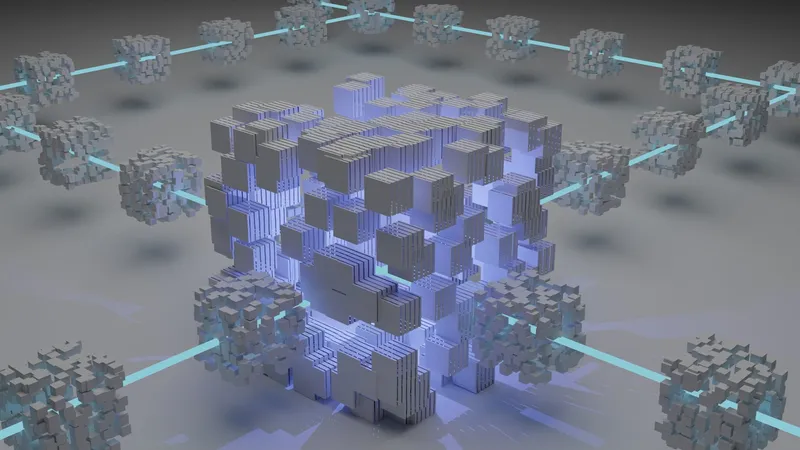
People learn networks as if they were rooms in one house. Send from the hall, arrive in the kitchen. Blockchains are separate notebooks. A “bridge” is extra software that tries to keep a story consistent across two of them: lock or burn here, mint or unlock there. The story is an IOU. The IOU is only as good as the lock, the messengers, and whoever can pause the machine. It is not a tunnel through bedrock. It is a loading dock with a clipboard.
The wrong network is still the wrong city is why the destination has to match. This page is the vehicle people use when they refuse to admit the cities are different. Ethereum without the jargon is one notebook. Solana, Bitcoin, and company layer-2s are others. Poly Network, Wormhole, and Ronin are the dated accidents. We will not write a fourth overlapping post-mortem. We will write the pattern so a tutorial’s “just bridge it” cannot do the explaining for you.
Lock, mint, hope
The common design is lock-and-mint. You send coins to a contract on chain A. Messengers — validators, guardians, a multisig, a light client, a company — attest that the lock happened. A contract on chain B mints a wrapped representation. To go home, you burn the wrap and wait for the original lock to release. If the attestation can be forged, chain B prints paper that is not backed. If the keys on the lock can be stolen, chain A pays out to a thief. Both have happened. The remaining honest wrappers then share a smaller vault.
Some designs burn on A and mint on B with no vault, if a native asset exists on both sides. Some are “official” rollup bridges that wait out a fraud window. Some are aggregators that route through whoever is cheapest this hour. The wallet dropdown rarely says which. Cheap and instant is a clue you are trusting a messenger, not waiting for a proof. Slow and ugly is sometimes the honest product.
The wrapped thing is not the native thing
Wrapped ether on another chain is a token that is supposed to be redeemable for ether on Ethereum. It has a different contract address. It can depeg in a market if people doubt the vault. It can be frozen if the wrapping contract has a pause. It can be copied by a lookalike token with the same ticker in the wallet. Your app may paint them with the same icon. The ledger does not.
USDT, USDC, and other dollar tokens have several native versions on several chains. Bridging can create a wrapped flavour that is not the one an exchange will credit. The wrong-network guide is the deposit-screen version. This paragraph is why “I bridged USDT” is not a sentence with one meaning. Always match: asset, flavour, chain, and the exact token the destination names. Four checks. Not two.
Rollup withdrawals are a queue. Random bridges are a vendor.
A layer-2 that settles to Ethereum usually has a canonical bridge: deposit, wait, withdraw through a window designed so fraud can be challenged. That wait can be minutes or a week depending on the design. People hate the wait, so third-party bridges and “fast exits” sell you someone else’s capital in the meantime. You are then trusting that someone. Coinbase’s Base is a company-operated layer-2; sequencer, bridge, and support culture are in the brochure. Dencun made posting data cheaper. It did not make a withdraw path into a tunnel.
Sidechains (Ronin’s old shape, others like it) are even further from Ethereum’s validator set. Throughput is a product. The lockup is another product. “Nine validators” is a brochure if five keys live in one operator’s cupboard. The Ronin news piece is the worked example. Do not hang Wormhole’s signature bug or Poly’s keeper bug on the same week. Different holes. Same lesson: the clipboard was the product.
The ad that bought the word “bridge”
Fake bridge sites are a genre. They copy the logo, ask for a connect, and request an approval or a transfer. Official URLs you typed yourself, from documentation that existed before you needed the bridge, beat a sponsored result. A Discord “helper” who will complete the transfer for you is not a helper. Hardware wallets are a practice: if you will not read the destination on the device, you are still in the laptop’s hands.
A verified contract on an explorer is not a safety certificate.
An audit is a snapshot of some code on some date.
“We refunded last time” is a company choice (Jump after Wormhole). It is not a law for the next hole.
Liquidity you see on a bridge UI is inventory, not a guarantee the vault on the other side is full.
Fees, time, and the second network
You pay on the way in and on the way out, on two auctions, plus whatever the bridge charges. On-chain fees are an auction applies twice. A “free” bridge is selling something else — routing, a token, your attention. Time is part of the price. If you cannot wait for a canonical exit, you are shopping for a vendor. Say that out loud before you sign.
After a bridge, you own an asset on a different notebook. Sending it “back” to an exchange that only credits the original chain is the wrong city again. Test with tuition. Wait until the explorer on the destination shows the token you expected, not only a pending spinner in the bridge UI.
What this guide will not do
It will not rank remaining bridges. It will not walk through exploit steps. It will not tell you bridging is fake or that one chain should eat the others. Separate notebooks are a design. Connecting them is extra software. Extra software has bugs, admin keys, and messengers. Banks have hours and lawyers. You are allowed to prefer a company withdrawal that credits the other chain’s deposit address. You are not allowed to confuse that with a tunnel.
DeFi is software with rules you cannot call support about if the wrap then sits in a pool. Staking is a lock and a queue if you thought a liquid staking token was a bridge home. Neither page replaces this one. The injury here is specifically: you no longer hold the native asset you thought you held. You hold a claim on a clipboard.
A calmer sequence if you are only learning
Stay on one chain until the send screen is boring. If a destination actually requires another chain, read whether there is a canonical path and how long it waits. Use an amount that would only annoy you. Type the URL. Match the token. Wait for the destination explorer. Then decide whether you needed to be in two cities today. Most days you did not.
Nothing here is an instruction to bridge, unwrap, buy, or sell any asset. A loading dock is a loading dock. The notebook on either side will still be there if you take the slow door.