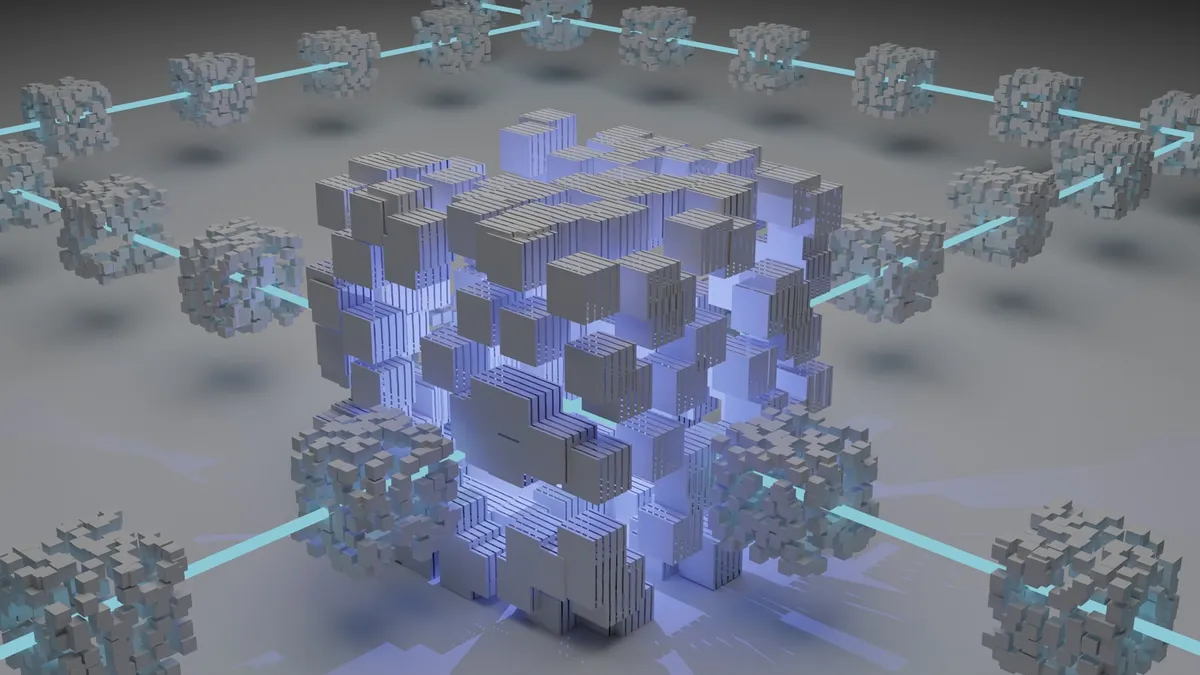
First published 30 October 2020, the day after mainnet. Expanded in October 2026 so the two address spaces are not described as one wallet, and so 21 million is not described as the supply. Conflux is a proof-of-work chain. Blocks can refer to more than one parent. The project calls that a tree-graph. Fan Long founded it. The research is associated with Andrew Yao’s group at Tsinghua. A university is not the chain. This page will not describe the mining.
Tethys, the mainnet phase, opened on 29 October 2020. The genesis allocation was 5 billion CFX, split among a team, investors, a community fund, and an ecosystem fund, with locks of two and four years. Those locks have run. An unlock was coins that already existed. Miners are still paid in new CFX. There is no hard cap in that genesis paper. A price times 5 billion misses the coins mined since.
FC was a different token. The spaces are different notebooks
Before mainnet the foundation issued a token called FC and said it would not sell CFX to the public. Holders could swap FC for CFX one for one, against 21 million CFX the foundation put in a contract. That 21 million is the size of the swap, and the ceiling the foundation put on FC. It is not the supply of CFX. FC you did not swap is not CFX. A site that says it can still finish the 2020 swap, and asks for a recovery phrase, is not that window.
The network has two spaces. Core space uses chain id 1029 and addresses that start with cfx. eSpace uses chain id 1030, Ethereum-style contracts, and addresses that start with 0x. The fee in both is CFX. A balance in one space is not a balance in the other, and a 0x address here is not an Ethereum address. Moving CFX between the spaces is a bridge inside the network. A bridge is extra software, not a tunnel. The wrong network is still the wrong city. Nothing here is an instruction to mine, to swap FC, or to buy CFX.