Bitcoin is a network of computers that agree on a single history of payments. The asset — also called bitcoin, with a small b if you want to be fussy — is an entry in that history. You can move an entry if you hold the matching keys. Nobody has a helpdesk that can reverse a confirmed send because you typed the address badly. That one fact explains both the appeal and the injuries.
This is the longer first-read. The short version on this URL used to be four paragraphs. It was not enough. You still do not need a trading floor. You do need the difference between the protocol, a company app, and a price.
The notebook, not the coin
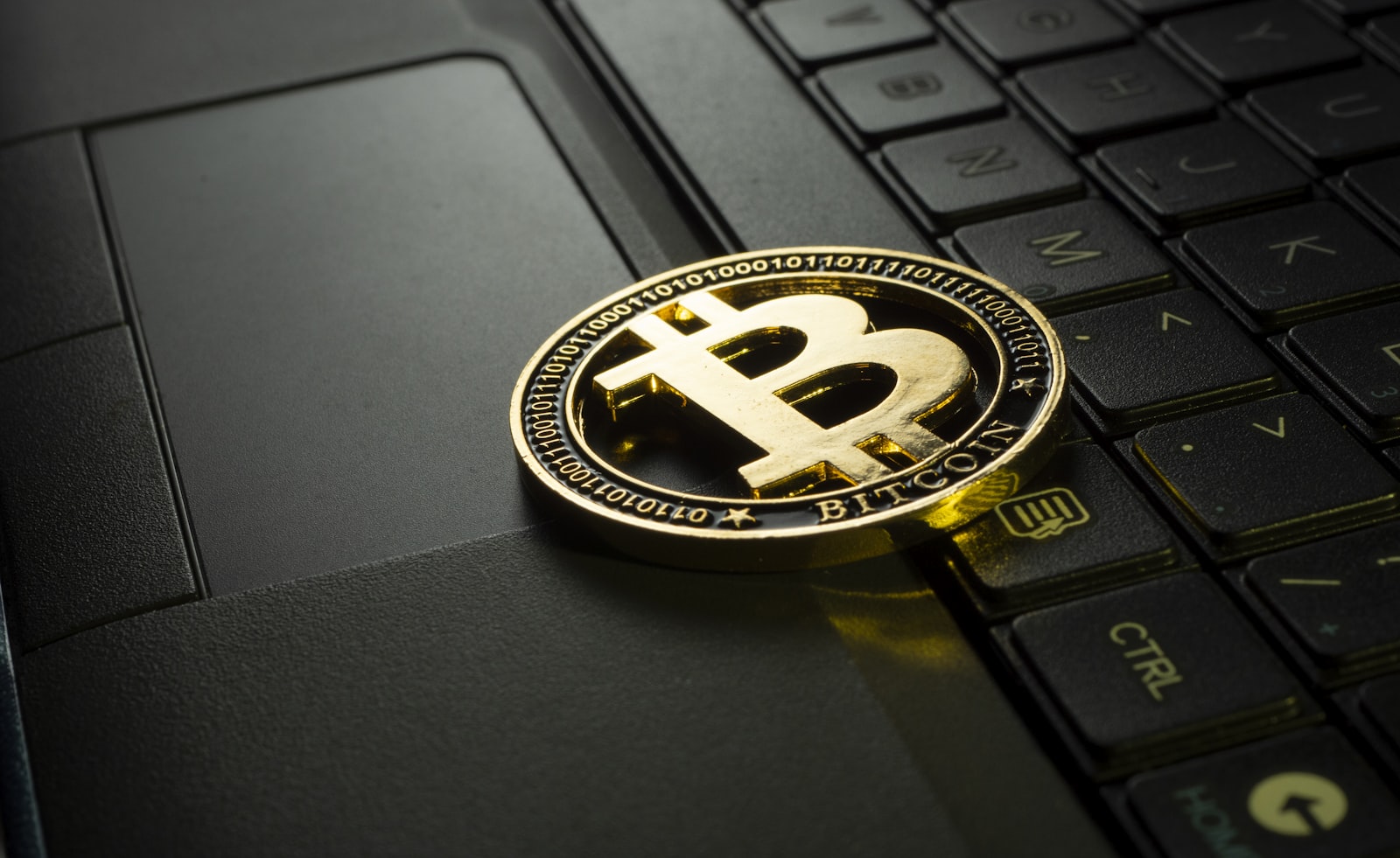
Physical coins in photographs are souvenirs. On the network there is no little gold disc moving around. There is a ledger. Each new page of that ledger is a block. A block is a batch of transactions plus a link to the page before it. Change an old payment and the links that follow no longer match. Honest participants ignore the broken version. That is the cartoon. The adult version is that “honest participants” are people and firms running software, often in pools, and that agreement is bought with work: machines spend energy proposing the next block, and the chain with the most accumulated work is treated as canonical.
You do not need to mine to use Bitcoin. You need to understand that the security story is “expensive to rewrite”, not “impossible to lose keys” and not “a court will unwind this”.
What you actually hold
A balance in a wallet is the wallet adding up pieces of bitcoin that your keys are allowed to spend. Bitcoin does not use an account number with a running total the way Ethereum does. It uses unspent outputs — think of them as leftover notes from previous payments. When you send, you usually consume one or more of those notes and create new ones: some for the recipient, often some back to yourself as change. Wallets hide this. You still meet it when a fee is calculated, when an exchange wants extra confirmations, or when a privacy lecture starts talking about not reusing addresses.
The keys come from a recovery phrase in any modern wallet. The phrase is the backup of the keys, not a login to “the Bitcoin company”. There is no Bitcoin company. See how crypto wallets actually work if that sentence is still slippery.
Issuance is a schedule, not a mood
New bitcoin is created as a reward to whoever adds the next block. About every 210,000 blocks — roughly four years — that reward is cut in half. That is the halving. The code aims at a cap of 21 million coins, reached far in the future as the reward tends toward zero. Fees paid by users also compensate miners; they matter more as the subsidy shrinks.
A schedule is not a price forecast. Markets can ignore a well-advertised supply change, or spend a year pricing it in early. We keep a separate page on the 2020 (and later) halvings so this one does not become a countdown clock. If a headline tells you what the next cut “means for the bull market”, it is not this guide.
Fees, confirmations, and “sent”
A fee is a bid to be included in a block. When many people want to move coins at once, they bid more. When the network is quiet, a small fee can be enough. Your wallet’s “recommended” fee is a guess about the next hour, not a law. A transaction can sit unconfirmed if you bid too low. It is not stolen. It is waiting. Sometimes it is dropped and the coins are still yours to send again. That is not the same as a bank recalling a payment.
One confirmation means a block included you. More confirmations mean more blocks stacked on top. Exchanges wait because a competing chain can still win for a moment and shuffle recent history. “Final” is a practical word, not an absolute. For ordinary amounts, a handful of confirmations is how professionals stop staring at the screen. For a house, they wait longer. We will not name a number as advice. We will say: the first green tick in an app is not a receipt from a lawyer.
Addresses are destinations, not identities
A Bitcoin address is a string you can share. It is derived from keys. It is not a passport. Reusing one address makes it easier for strangers to cluster your activity. Generating a fresh receive address each time is a privacy habit, not a moral requirement. Payment QR codes are usually an address, sometimes plus an amount. Copy, then check the first and last characters on a screen you trust — preferably the hardware device if you use one.
Bitcoin addresses do not look like Ethereum addresses. That is a gift. The trap is thinking every crypto address works like email: one inbox, any network. Bitcoin is its own notebook. Send bitcoin to an Ethereum address and you have posted a letter to the right house number in the wrong city. See the networks guide when you are ready for tokens, memos, and layer-2s.
Mining is how the notebook stays hard to rewrite
Miners (or, more honestly, mining firms) convert electricity and hardware into proposed blocks. They are paid in new bitcoin plus fees. When the reward halves, some of them become unprofitable until the price or the fees make the sums work. Hashrate moving between countries is a story about power markets and policy, not about Bitcoin “dying”. China tightening mining in 2021 moved machines. The chain kept producing blocks. That is the useful sentence. Energy use is a values argument we will not settle here. The engineering claim is narrower: proof of work makes rewriting history costly in joules.
You do not need a miner in the spare room. You do need to notice when a headline treats hashrate as a stock tip.
A company balance is not bitcoin on your keys
If you buy bitcoin in an app and leave it there, you have a claim on that company. The firm’s hot wallets, cold wallets, and auditors are the product. Withdrawals are a request. During an outage you may see a number you cannot move. During insolvency you are a creditor. That can still be the right tool for a small amount or a short stay. It is the wrong picture if you tell yourself you “own Bitcoin” in the protocol sense. How buying crypto actually works is the on-ramp map. This page is the asset.
What Bitcoin is not
Not a company you can phone.
Not anonymous by default. The ledger is public. Exchanges have names. Analytics firms cluster addresses.
Not a guaranteed store of value. People use that phrase. History includes 80% drawdowns. “Store” is a hope, not a warranty.
Not the same as “crypto”. Ether, tokens, and dollar coins are other products. A wallet that speaks many networks will let you pick the wrong one.
Not legal tender unless some government says so for its own reasons. El Salvador’s experiment is a policy story, not a feature of the code.
Not a payment app with chargebacks. Some firms build those on top. The base layer does not owe you one.
Forks, without the civil war
In 2017 a group left to run Bitcoin Cash with larger blocks. In 2018 Bitcoin Cash itself split. Tickers collided. If you held bitcoin on your own keys at a fork, you generally had a claim on both tapes — and a mess if an exchange froze the wrong one. Most days there is no fork, only software updates. Taproot in 2021 was an upgrade, not a new coin. If a headline says “Bitcoin is splitting”, ask which chain, which block, and whether your wallet even notices.
A calmer way to go further
Learn wallets before you learn charts. Practise a restore with an empty phrase. Send a test amount you can shrug at. Read fees as an auction. Read company apps as companies. The security checklist is the boring half that prevents expensive afternoons.
If you wanted a one-line definition to keep: Bitcoin is a shared record of who can spend which coins, kept in sync without a central bookkeeper, with a issuance schedule written in software. Everything else is a product, a policy, or a price. We will not tell you to buy, sell, or hold it. Tuition is a small send you understood. A slogan is not tuition.