People learn addresses as if they were email. One string, any provider, the mail still arrives. Blockchains are not email. Each network is a city with its own streets. An Ethereum address and a Bitcoin address do not even look alike, which is a mercy. The injuries happen when two cities use similar-looking addresses, or when a wallet lists “USDT” as if it were one object, or when an exchange shows a deposit QR without a loud network badge.
This guide is the missing chapter between how wallets work and how buying works. It is not a recovery service. If you already sent to the wrong chain, skip to the last section, then slow down. Tired people sign the second trap.
One ticker, several notebooks
Bitcoin lives on Bitcoin. Ether lives on Ethereum. A token called USDT can exist on Ethereum, on Tron, on a layer-2, and on other ledgers besides. The letters in the wallet are a display name. The thing you can spend is a balance on one specific ledger. Sending Ethereum-USDT to a Tron deposit address is like wiring dollars to a sterling sort code because both are “money”. The rails do not care that you were in a hurry.
Native assets are the coin the chain uses for fees: BTC on Bitcoin, ETH on Ethereum, SOL on Solana. Tokens are balances inside contracts (or equivalent) that your wallet knows how to paint with an icon. A pretty icon is not a certificate that two USDT listings are interchangeable. Always match: asset, network, address, and any memo. Four checks. Not two.
Layer-2s are related. They are not identical.
Ethereum got expensive, so people built networks that batch work and settle back to Ethereum — rollups and other layer-2s. Your wallet may show the same 0x address on Ethereum, on Arbitrum, on Optimism, on Base. That is because those systems reuse the address format. The funds are still in different notebooks. A dapp that says “deposit on Base” will not see coins you sent on Ethereum mainnet to the same characters. Some bridges can move a representation across. Bridges are extra smart-contract risk. They are not a magic tunnel that makes the networks the same.
If a tutorial says “bridge”, you are adding a contract, a wait, and a way to be phished by a fake bridge site. Practise with an amount that would only annoy you. Official URLs you typed yourself. Not a sponsored result that bought the word “bridge”.
Memos, tags, and the postcode on the parcel
Some networks and some exchanges use an extra field: destination tag, memo, message, payment ID. XRP and some other ledgers are famous for this. The address gets the coins to the company’s front door. The memo says which customer. Omit it and the coins can sit in a lobby nobody is looking at. Fill it from the exchange’s deposit screen, not from a chat. If the field is required, treat it like a sort code. Optional on one venue is required on another. Read the deposit article for that asset on that venue, every time.
Bitcoin and Ethereum do not use memos in the same way. That does not make them “safer”. It makes their failure mode different: wrong address, wrong network, no tag to argue about.
How wallets hide the danger
A multi-coin wallet is a remote control for several cities. The send screen has a network dropdown that looks like a preference, not a cliff. People inherit the last network they used. They paste an address a friend sent. They tap. The friend was on a different chain. Both of you did something reasonable. The ledger did exactly what it was told.
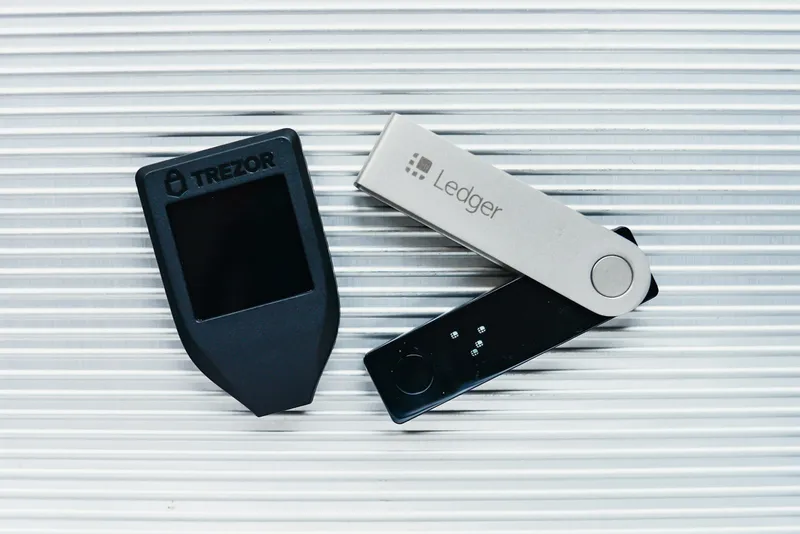
Hardware wallets that show the network and the destination on their own screen exist because laptops lie. Clipboard malware swaps addresses. A screenshot in a group chat is not a source. Copy from the receiving wallet, on the network badge you can point at with a finger. Then send a test. Wait until it is actually there — not “pending”, not “the app said sent”. Then send the rest. How buying crypto actually works said this about withdrawals. It is the same ritual for any move you would hate to undo.
Bitcoin addresses and Ethereum addresses should look different. If they do not, you are not looking at Bitcoin and Ethereum.
“USDT” without a network is not a destination.
A QR code includes whatever the issuer put in it. Check the network line, not only the picture.
Exchange deposit pages rotate addresses. An old screenshot can be retired.
Stablecoins are where this bites hardest
Dollar tokens are how people move between venues without living in volatile units. They are also how a single ticker explodes into five deposit options. USDC and USDT are different issuers. Each issuer’s token on Ethereum is not the same object as the same letters on another chain. Some venues credit you if you send the “wrong” flavour and open a ticket. Some do not. Some take weeks. None of that is a protocol feature. It is customer service. Read stablecoins: useful, not magic for the reserve story. This page is the send story.
If you cannot name the chain a balance sits on, you cannot name the fee you will pay, the confirmation you will wait for, or the address format that will work. That is the whole lesson.
What to do if you already sent it wrong
Assume it is gone unless a specific, honest party can help. If you sent to an exchange deposit on the wrong network, that exchange sometimes has a recovery process — slow, sometimes paid, not guaranteed. Open a ticket with the transaction hash. Do not take help from the first person who DMs you. If you sent to your own 0x address on the wrong Ethereum-like network, the keys that control that address on one chain often control the same characters on another — which means a wallet that speaks the destination chain might show the coins. That is a maybe, not a method we will walk through as a recipe, because the next click is how people import a phrase into a fake app.
If you sent to someone else’s address on the wrong chain, you need that person, on that chain, to send back. Strangers on explorers are not that person. “Recovery experts” who ask for your phrase are thieves.
Then stop. Write down the hash. Use a known-good machine. The security checklist is the aftercare.
A send screen you can actually use
Asset. Network. Full address, checked on a device you trust. Memo if the destination is an exchange that asks for one. Fee you can live with. Test amount. Wait. Rest. If any line is a shrug, you are not ready. The chain will still be there in twenty minutes. The wrong city will not forward your mail.
This is information, not a recommendation to use any wallet, bridge, or dollar token. We will not tell you which network is “best”. Best is the one the destination actually uses.