First published 13 February 2019; rewritten August 2026 and expanded in October 2026. The old analogy — “your wallet is like an email address” — is how people click seed-phrase phishing. Addresses can be shown. Phrases must not.
Two different products
A software or hardware wallet holds keys that can sign Bitcoin transactions. A company account labelled “wallet” holds an IOU. Both can display a number. Only the first one lets you move coins if the company disappears. How crypto wallets actually work is the longer version of keys versus coins. This page is the Bitcoin-shaped difference.
The network holds the coins. The wallet holds the keys.
There is no little gold disc inside the app. The ledger records which pieces of bitcoin your keys are allowed to spend. The wallet looks that record up and adds the pieces. If two honest wallets use the same recovery phrase, they should eventually show the same funds, because they are reading the same public notebook. The phrase — usually 12 or 24 words — is the backup of the keys. Anyone who has it can recreate the wallet. Support will not ask for it. A screenshot is a backup for thieves. A PDF in email is the same mistake with a filename.
Bitcoin spends notes, not a running bank balance
Bitcoin does not keep one account number with a single total the way Ethereum does. It keeps unspent outputs: leftover notes from earlier payments. When you send, the wallet usually consumes one or more notes and creates new ones. One note pays the recipient. Another often comes back to you as change. That change is still yours. A balance that looks short for a few minutes while change confirms is not a theft.
A send that uses many tiny notes costs more, because the instruction is larger. That is not a penalty. It is the size of the message. On-chain fees are an auction. If a wallet looks expensive to empty, ask how many notes it is spending before you assume the chain is punishing you.
Address shapes you will actually see
All of these can be yours. They are formats, not different bitcoins.
Legacy addresses start with 1. Older, larger on the wire, still valid.
Addresses that start with 3 are a wrapper many wallets used on the way to newer formats.
Native SegWit addresses start with bc1q. Smaller, which usually means a lower fee for the same payment.
Taproot addresses start with bc1p. That is the 2021 Taproot upgrade, not a new coin. Most current wallets can pay them. A very old wallet might refuse. If a send to bc1p will not build, the problem is the sender’s software.
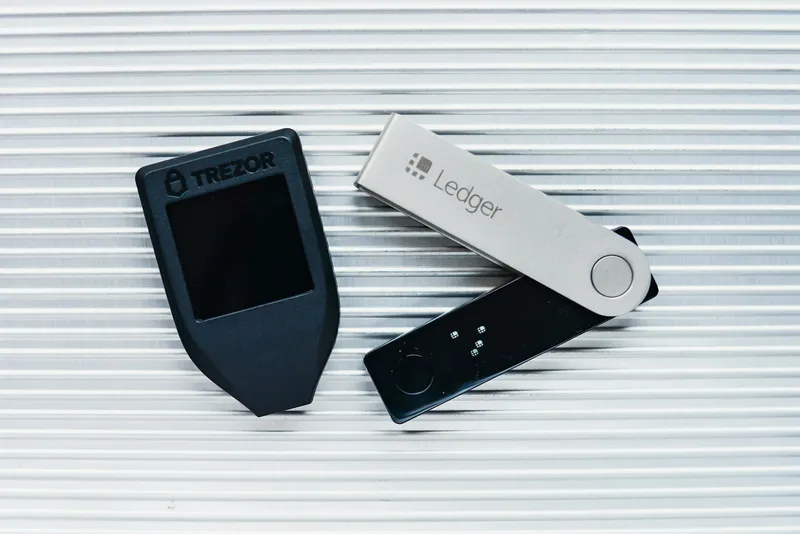
You can share a receive address. Check the first and last characters on a screen you trust — the hardware device, if you use one, because laptops can lie about the clipboard. A fresh receive address each time is a privacy habit, not a moral rule. Reusing one address makes it easier for strangers to cluster what you do.
Lightning is a different object
A Lightning invoice is not a Bitcoin address. Lightning is a network of payment channels built on top of Bitcoin: useful for small, fast payments, with coins locked in a channel rather than sitting as an ordinary on-chain note. It has its own failure modes: routing, liquidity, and custodial apps that call a balance “Lightning” while they hold the keys. The formats do not let you paste an on-chain address where an invoice belongs, which is a mercy. If you cannot say whether a QR code is an address or an invoice, do not pay it.
Watch-only, and the company app
A watch-only wallet can see a balance and cannot send, because it has no private keys. Useful for checking. Useless as a backup. An exchange or brokerage screen that says “Bitcoin wallet” is usually the company’s database. Password reset exists there because they hold the keys. An exchange balance is an IOU, not a wallet.
Bitcoin-only versus a wallet that speaks every chain
Some wallets speak only Bitcoin. Some speak many networks and then let you pick the wrong one. If you are only learning Bitcoin, a Bitcoin-only app or device reduces the ways to send to the wrong chain. Convenience is a feature. It is also how mix-ups happen. The wrong network is still the wrong city.
What to do before the amount matters
Create the wallet. Write the phrase on paper. Wipe the app or device. Restore. Confirm the addresses match. Then send a tiny amount you can shrug at, wait until it is actually there, and only then send more. Read the asset, the network, the address, and the fee. If the amount would ruin a month, hardware wallets are a practice, not a shopping list. If someone else should be able to find the paper, a backup is an estate plan, not a treasure map.
This page is not a shopping list and not an instruction to buy, sell, or hold bitcoin.